
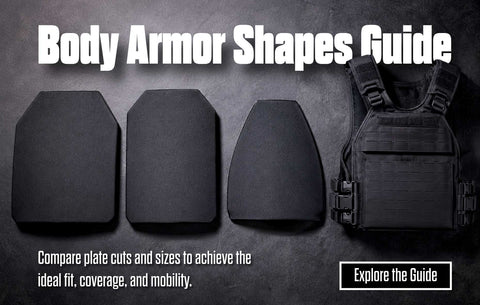
Selecting the correct body armor shape and size is the difference between confident protection and compromised coverage. We break down every major plate cut, sizing standard, and fit strategy so you can choose armor that balances mobility, comfort, and maximum ballistic protection.
Understanding Body Armor Plate Geometry
Body armor is not one-size-fits-all. Plate geometry directly impacts:
- Coverage area (vital organs vs extended protection)
- Mobility and ergonomics
- Weight distribution and fatigue
- Compatibility with carriers and gear
Core Plate Dimensions
Most armor plates follow standardized sizing:
| Size | Dimensions (inches) | Typical Fit |
|---|---|---|
| Small | 8.75 × 11.75 | Smaller frames |
| Medium | 9.5 × 12.5 | Average build |
| Large | 10.25 × 13.25 | Broad chest |
| X-Large | 11 × 14 | Large/tall users |
However, size alone is only half the equation. The shape or cut defines real-world usability.
Major Body Armor Plate Cuts Explained

1. Shooter Cut Plates
Best for: Tactical mobility, firearm handling
Shooter cut plates feature angled top corners to allow improved shoulder articulation when aiming a rifle.
Key Benefits:
- Enhanced weapon shouldering
- Reduced interference during engagement
- Balanced coverage vs mobility
Limitations:
- Slightly reduced upper chest protection
2. Swimmer Cut Plates
Best for: Maximum mobility, lightweight setups
Swimmer cut plates remove more material from the top edges, creating a more aggressive taper.
Key Benefits:
- Superior range of motion
- Lightweight and agile
- Ideal for rapid movement environments
Limitations:
- Reduced coverage compared to other cuts
3. SAPI / ESAPI Cut Plates
Best for: Military-grade protection, full coverage
SAPI (Small Arms Protective Insert) and ESAPI plates are manufactured to military specifications.
Key Benefits:
- Maximum vital organ coverage
- Standardized military fit
- Compatible with most carriers
Limitations:
- Heavier
- Slightly reduced shoulder mobility
4. Full Cut Plates
Best for: Maximum coverage applications
Full cut plates maintain a rectangular profile with minimal corner reduction.
Key Benefits:
- Maximum ballistic coverage
- Ideal for static or defensive roles
Limitations:
- Restricts movement
- Less ergonomic for tactical use
For a deeper breakdown, see our plate cuts guide.
Plate Curvature: Single vs Multi-Curve
Single Curve Plates
- Curved in one direction
- Cost-effective
- Suitable for short-term wear
Multi-Curve Plates
- Contoured to match chest anatomy
- Superior comfort for extended use
- Better weight distribution
Recommendation: Multi-curve plates provide significantly better long-duration wearability and should be prioritized.
Coverage vs Mobility: Strategic Trade-Off
Choosing the right plate shape is a deliberate compromise:
| Priority | Recommended Cut |
|---|---|
| Maximum Protection | Full Cut / SAPI |
| Balanced Performance | Shooter Cut |
| High Mobility | Swimmer Cut |
How to Properly Size Body Armor Plates
Correct sizing ensures coverage of vital organs without restricting movement.
Step-by-Step Sizing Method
- Measure chest width nipple-to-nipple
- Measure torso height from the suprasternal notch to 2–3 inches above the navel
- Select a plate that:
- Covers the heart and lungs
- Does not extend into the abdomen when seated
- Does not interfere with arm movement
Critical Fit Rules
- The top edge aligns with the suprasternal notch
- The plate should not exceed the nipple width
- Bottom edge should allow seated mobility
Plate Placement: Where Protection Matters Most
Incorrect placement reduces effectiveness regardless of plate quality.
| Step | Body Area | Purpose |
|---|---|---|
| 1 | Suprasternal Notch | Top alignment point for proper plate positioning |
| 2 | Heart Coverage Zone | Ensures protection of critical cardiac area |
| 3 | Lung Protection Area | Covers vital respiratory organs |
| 4 | Upper Abdomen Clearance | Maintains mobility while avoiding restriction when seated |
Weight Considerations and Performance Impact
Plate weight varies based on material:
| Material | Avg Weight (10x12) | Notes |
|---|---|---|
| Steel | 8–10 lbs | Durable but heavy |
| Ceramic | 5–7 lbs | Balanced protection |
| Polyethylene | 3–5 lbs | Lightweight, premium |
Insight: Lighter plates improve endurance and reduce fatigue during prolonged wear.
Compare material performance in our plate materials guide.
Plate Carrier Compatibility
Not all plates fit all carriers. Key factors:
- Plate size vs carrier size
- Thickness (especially with steel vs ceramic)
- Cut compatibility (SAPI vs shooter cut carriers)
Always match plate specifications with carrier design.
Choosing the Right Setup for Your Use Case
Always consider certified protection levels explained in armor ratings.
Tactical / Law Enforcement
- Shooter or SAPI cut
- Multi-curve ceramic or polyethylene
Home Defense
- SAPI or Full Cut
- Emphasis on coverage over mobility
Training / Preparedness
- Shooter cut
- Balanced weight and comfort
High-Mobility Environments
- Swimmer cut
- Lightweight materials
Common Mistakes to Avoid
- Selecting plates based on carrier size alone
- Ignoring curvature for long wear
- Choosing maximum coverage without considering mobility
- Improper plate placement
- Overlooking weight fatigue
Final Verdict
Body armor is only effective when it fits correctly and aligns with your operational needs. The ideal setup combines:
- Proper sizing for anatomical coverage
- The right plate cut for mobility vs protection
- Lightweight materials for endurance
- Multi-curve design for comfort
A strategic approach ensures you stay protected, mobile, and mission-ready in any scenario.
Upgrade Your Protection with Trusted Body Armor
If you're in the market for body armor or ballistic plates, Shield Concept offers top-quality shooter cut and SAPI armor plates from Hesco. Get genuine quality, fast shipping, and strong value.
Frequently Asked Questions
What is the best body armor plate shape for most users?
Shooter cut plates are the most versatile option. They provide a strong balance between protection and mobility, making them ideal for most tactical and everyday use cases.
How do I know which body armor plate size I need?
Measure your chest width from nipple to nipple and torso height from the suprasternal notch to a few inches above the navel. The plate should cover your heart and lungs without restricting movement.
What is the difference between SAPI, shooter, and swimmer cut plates?
SAPI plates offer maximum coverage, shooter-cut plates improve weapon handling, and swimmer-cut plates prioritize mobility with reduced coverage. Each serves a different purpose depending on your needs.
Are lighter body armor plates better?
Lighter plates improve comfort and reduce fatigue, especially for extended wear. However, they often come at a higher cost. The best choice depends on your balance between weight, protection level, and budget.
How should body armor plates be positioned for proper protection?
The top of the plate should sit at the suprasternal notch, covering the heart and lungs. Proper placement ensures maximum protection without limiting mobility or comfort.