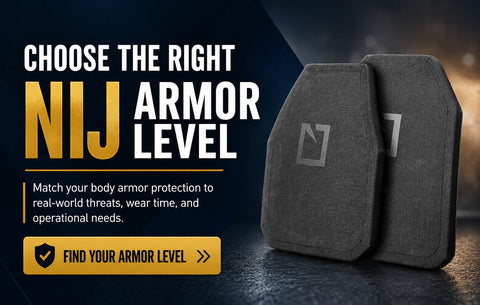
Choosing the right NIJ body armor level starts with understanding the threats you may realistically face. Higher protection does not automatically mean better protection for every situation.
Instead, effective armor selection balances ballistic protection, weight, mobility, comfort, coverage, and expected wear time. Department policies may also set minimum requirements for specific assignments.
The National Institute of Justice now classifies ballistic armor using HG and RF threat levels. These categories replace several familiar Roman numeral classifications under the newer NIJ standards.
Understanding the Current NIJ Body Armor Levels
NIJ Standard 0101.07 establishes performance requirements for ballistic-resistant body armor used by U.S. law enforcement. Meanwhile, NIJ Standard 0123.00 defines the associated ballistic protection levels and test threats.
The newer classifications include:
- NIJ HG1: Replaces the former NIJ Level II classification.
- NIJ HG2: Replaces the former NIJ Level IIIA classification.
- NIJ RF1: Replaces the former NIJ Level III classification.
- NIJ RF2: Adds an intermediate rifle protection category.
- NIJ RF3: Replaces the former NIJ Level IV classification.
HG identifies handgun threats, while RF identifies rifle threats. Therefore, the naming system makes the intended protection category easier to recognize.
However, many armor products still reference NIJ 0101.06 terminology. NIJ expects to maintain its older compliant-products list through at least the end of 2029.
Start With the Threats You Are Most Likely to Encounter
Your expected threat environment should guide your armor selection.
First, identify the firearms commonly encountered within your operating area. Additionally, consider ammunition associated with documented local threats.
Law enforcement professionals should also consider their issued or personally carried firearm. Armor selection should account for ammunition accessible within the immediate working environment.
Likewise, agencies should review firearms commonly carried by their workforce. This assessment provides another practical reference when establishing armor requirements.
Local conditions also matter. For example, communities with significant hunting or sport-shooting activity may present different firearm considerations.
Therefore, armor selection should reflect realistic exposure rather instead of assumptions about the highest available protection level.
Consider How Long You Will Wear Your Armor
Protection matters, but wearability also affects performance in practice.
Soft body armor generally supports extended wear better than heavier rifle-rated systems. Consequently, officers working long shifts may value mobility and comfort alongside ballistic protection.
By comparison, hard armor plates protect against specified rifle threats. However, plates can increase weight and affect movement through prolonged use.
For this reason, consider how often you will wear the armor.
Will you wear it throughout an entire shift? Alternatively, will you deploy it only during higher-risk incidents?
Your answer may greatly affect the appropriate armor configuration.
Determine Whether the Armor Is for Daily Use or an Active Shooter Kit
Armor used every day functions a different purpose than equipment reserved for emergency deployment.
For routine duties, comfort and mobility can strongly influence consistent wear. Therefore, the selected armor should provide appropriate protection without unnecessarily limiting movement.
Conversely, an active shooter kit may prioritize higher rifle-threat protection. These systems are often intended for shorter periods during elevated-risk responses.
However, simply choosing the highest rating can create unnecessary weight. Instead, match the protection level with anticipated threats and operational necessities.
Understand Handgun and Rifle Protection
NIJ HG-rated armor addresses specified handgun threats under the current standards.
NIJ HG1 represents the category formerly associated with Level II armor. Meanwhile, HG2 corresponds to the former Level IIIA classification.
Rifle-rated protection begins with NIJ RF1 under the newer system. RF1 replaces the former Level III classification while integrating updated test threats.
Additionally, RF2 provides an intermediate rifle category between RF1 and RF3. RF3 represents the category formerly known as Level IV.
Therefore, shoppers should check the actual NIJ classification rather than relying only on marketing terms.
Choose NIJ-Compliant Body Armor
An advertised protection level does not necessarily mean a product completed NIJ compliance testing.
Therefore, buyers should verify whether the specific armor model appears on the applicable NIJ compliant-products list.
NIJ Standard 0101.07 establishes minimum performance requirements and standardized testing methods for ballistic-resistant body armor. The NIJ Compliance Testing Program evaluates armor versus those requirements.
Consequently, verifying the specific model provides more useful information than relying on broad claims such as "NIJ tested."
Also, remember that ballistic-resistant armor does not make the wearer invulnerable. Protection depends on the tested threat, armor condition, coverage, fit, and proper use.
Fit, Coverage, and Mobility Matter
The correct threat level is only one part of choosing body armor.
Proper sizing should provide useful torso coverage without excessively restricting normal movement. Similarly, armor should remain positioned correctly while standing, sitting, bending, or performing assigned duties.
Poorly fitted armor may become uncomfortable throughout extended wear. As a result, users may adjust it improperly or become less willing to wear it consistently.
Additionally, heavier protection can affect mobility and endurance. Therefore, the real benefits of additional protection should justify the added weight.
Which NIJ Level Should You Choose?
There is no single NIJ body armor level that is optimal for everyone.
Instead, select protection based on your realistic threat assessment, assignment, wear duration, mobility requirements, and department regulations.
For primarily handgun threats, HG-rated armor may provide the appropriate starting point. Conversely, environments involving credible rifle threats require evaluation of RF-rated protection.
Additionally, specialized response equipment may require a different configuration than everyday body armor.
Most importantly, select armor based on documented performance rather instead of assumptions. Verify its NIJ compliance status and confirm that its protection level addresses your expected threats.
Ultimately, the best NIJ body armor level is not simply the highest available rating. It is the level that provides appropriate protection while remaining practical for your intended use.
Ready to Choose Your Body Armor
If you’re in the market for NIJ body armor, Shield Concept offers high-quality armor plates built for dependable protection. Shop our inventory for competitive pricing, fast shipping, and genuine quality for your money.
Shop Armor Plates